A tale of three Souks
In a country known for its glitz and glamour and mega infrastructure projects, as a visitor to the UAE it is hard not to feel like everything you see and experience has been carefully curated and constructed. Local culture, whatever that may be, feels incredibly closed off and hidden. In an effort to peak slightly beyond the curtains and to try and get a glimpse into a more local experience of daily life, I visited the three different markets within the Zayed Port area.
When I first arrived in the UAE, I started looking and asking around for ideas for a possible photo story, but I quickly ran up against a brick wall. I showed people some of my other photo stories on my website, asking for ideas or leads, and the consensus was that I would struggle to do something similar here. My initial thought (as always) was to do something food related, but nothing really stood out to me. Even after a month there (and excuse my ignorance), I can’t say that I can confidently tell someone what Emirati cuisine is. I also thought about trying to explore something related to Bedouin culture, but I realised that I would struggle to go beyond the touristy, commodified version on display at pay-to-enter festivals. I felt a little bit stuck.
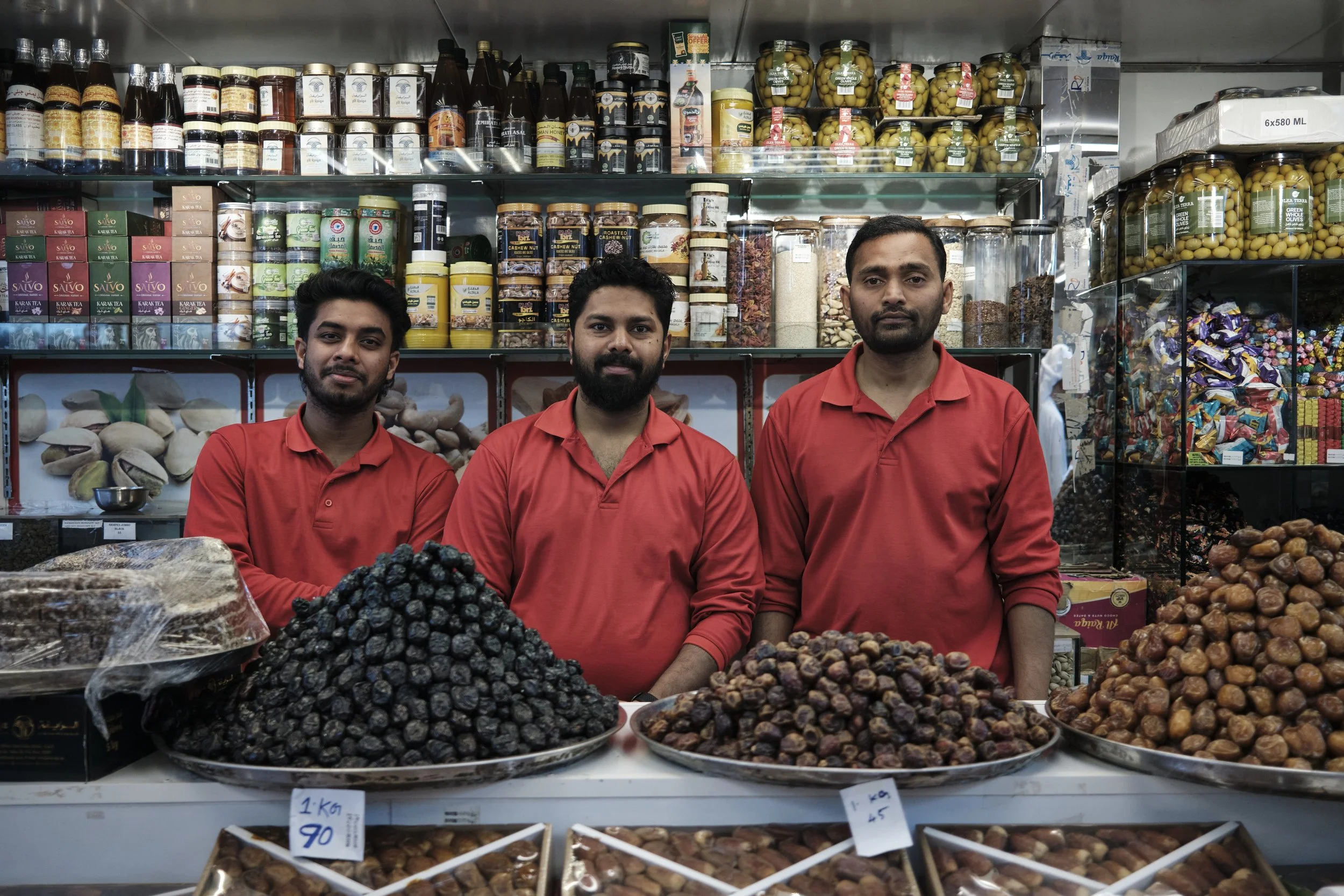
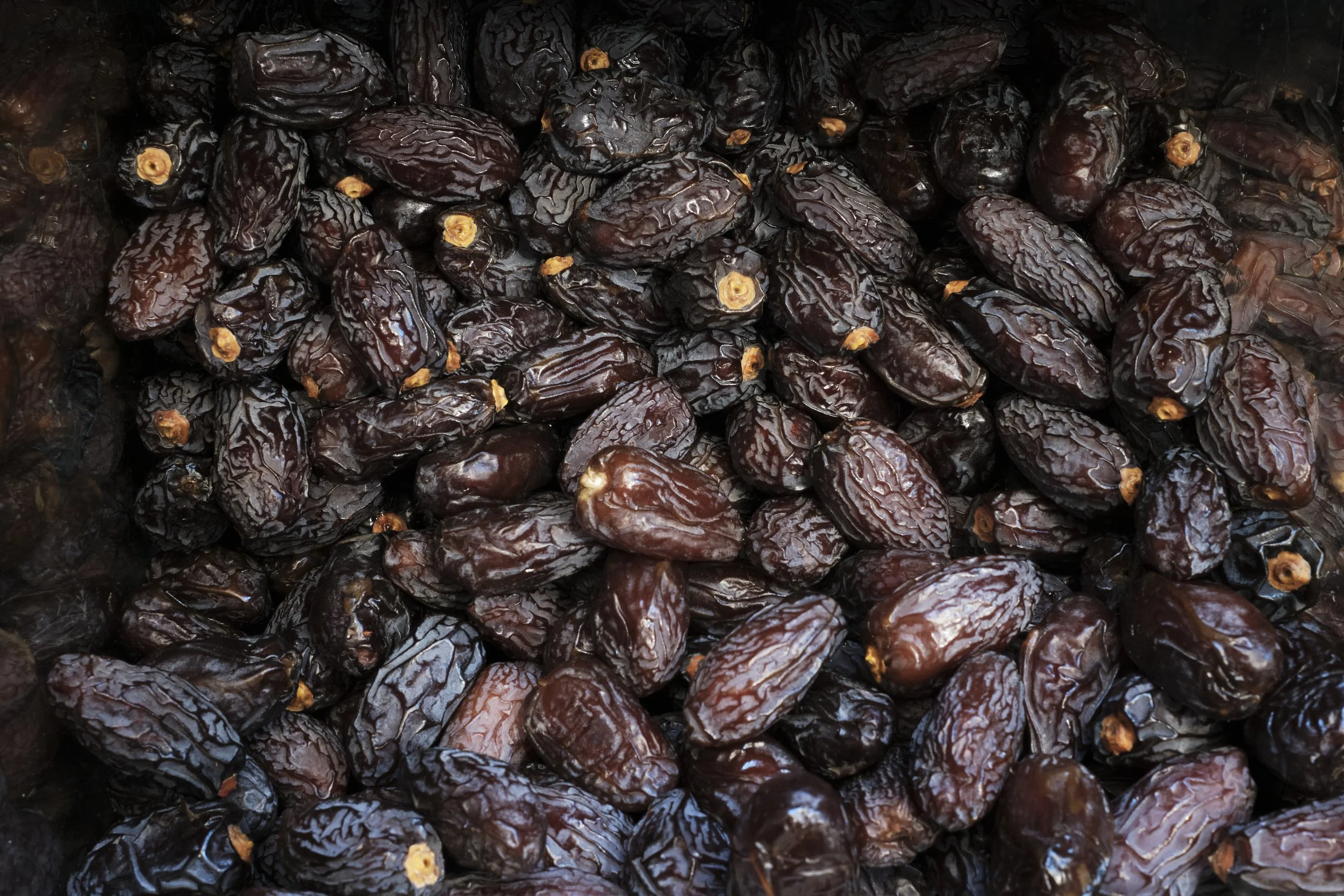
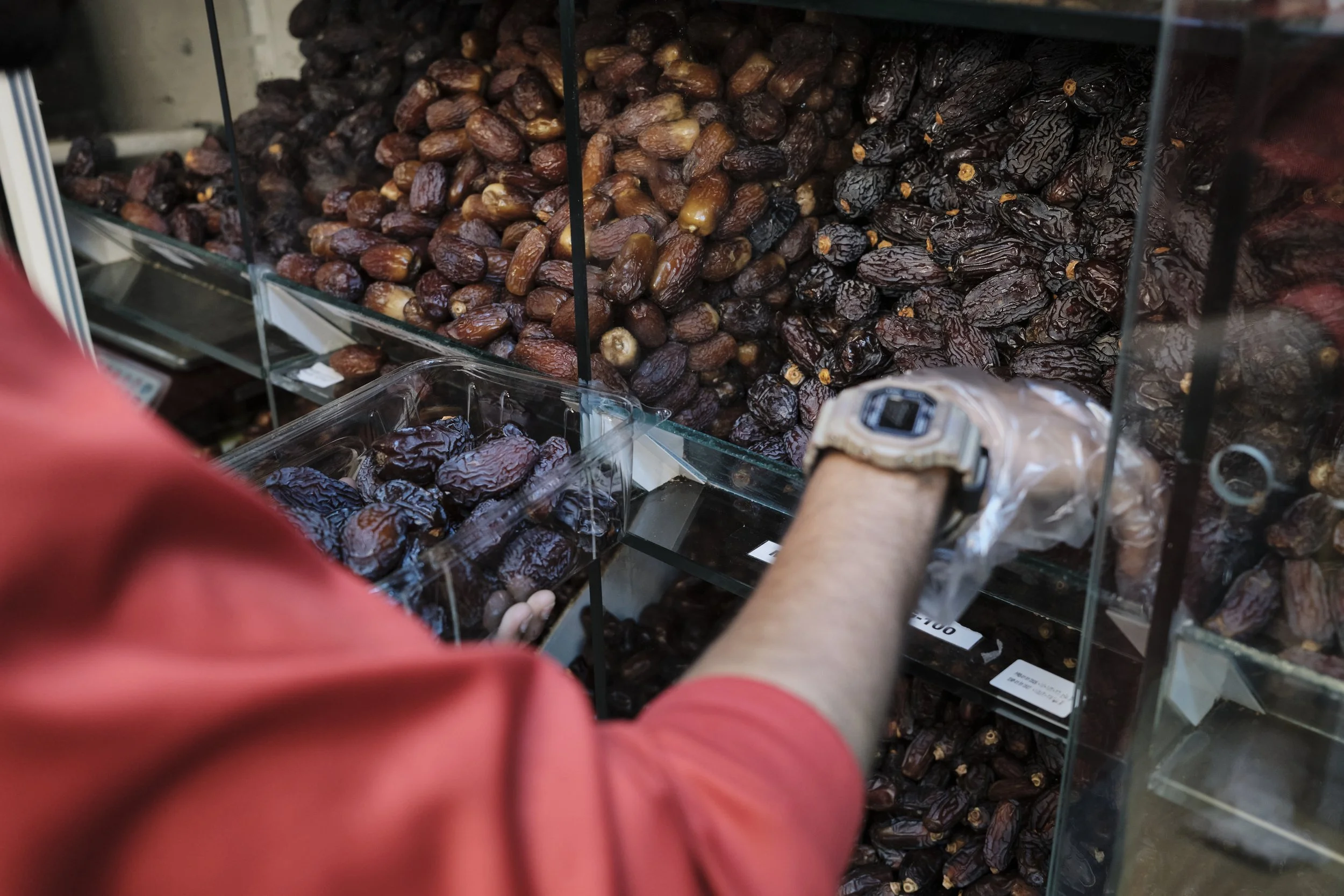
One Saturday, I decided to go and visit the local date market. I’m not a particularly big fan of dates, but it seemed like a good place to get some gifts. Getting out of my Careem (the local Uber), I found myself under a canopy, flanked by maybe a dozen shops on each side. To the right were all the date shops. Looking from a distance, each shop had various types of dates and confectionary on display, with attendants standing outside trying to direct traffic in. Given that I know nothing about the varieties or pricing of dates, I made my decision to enter the Ali Ashoor Date Shop solely because their dates were arranged the most photogenically.
As I entered the store, I was offered a whole of different dates to try. Among others, I was offered the Saudi Arabian Medjool, the “king” of dates, which were large, chewy and incredibly sweet. This was my favourite. I also tried the local khalas date, which was soft and slightly milder in flavour. Also nice. I was handed a cup Gahwa coffee, and a few chocolate covered dates. The salesmen knew exactly how to play me (and I ended up leaving with a kilo of Medjool dates). The salesmen informed me that palm tree (and date) cultivation was thousands of years old, while the market itself was one of the oldest trading areas in the city, having been around since the late 1960s (even before the UAE was a country).
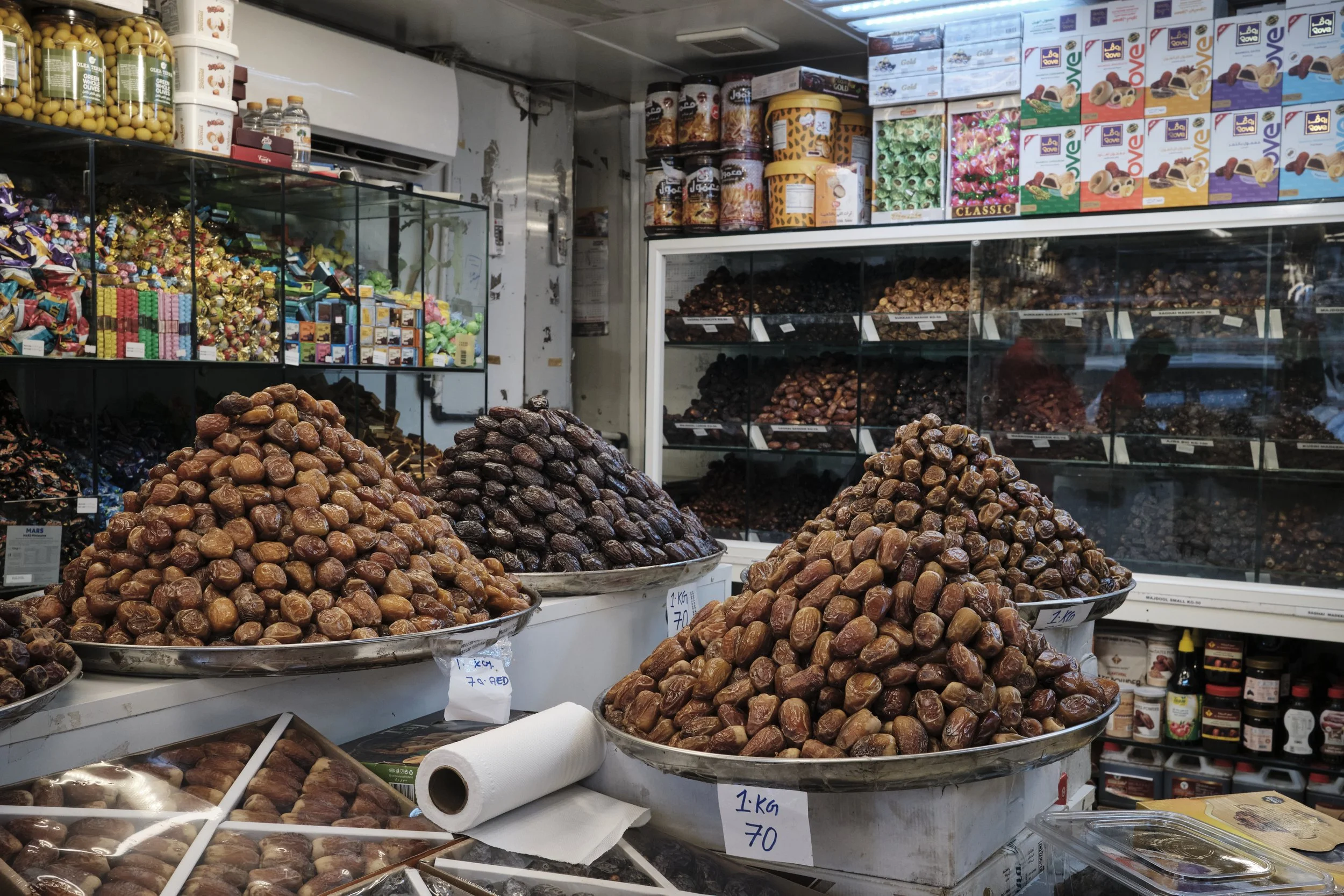
Especially as it was a few weeks before Ramadan, the store was packed with tourists but also seemingly with UAE residents, Emirati or otherwise. My paltry 1kg was nothing compared to most other orders, with a few needing carts to wheel their massive hauls back to their vehicles. I knew that dates were a common snack in the UAE and that they were important in Muslim culture, especially to break fast with, but I don’t think I fully appreciated the importance of this fruit in Arabic culture.
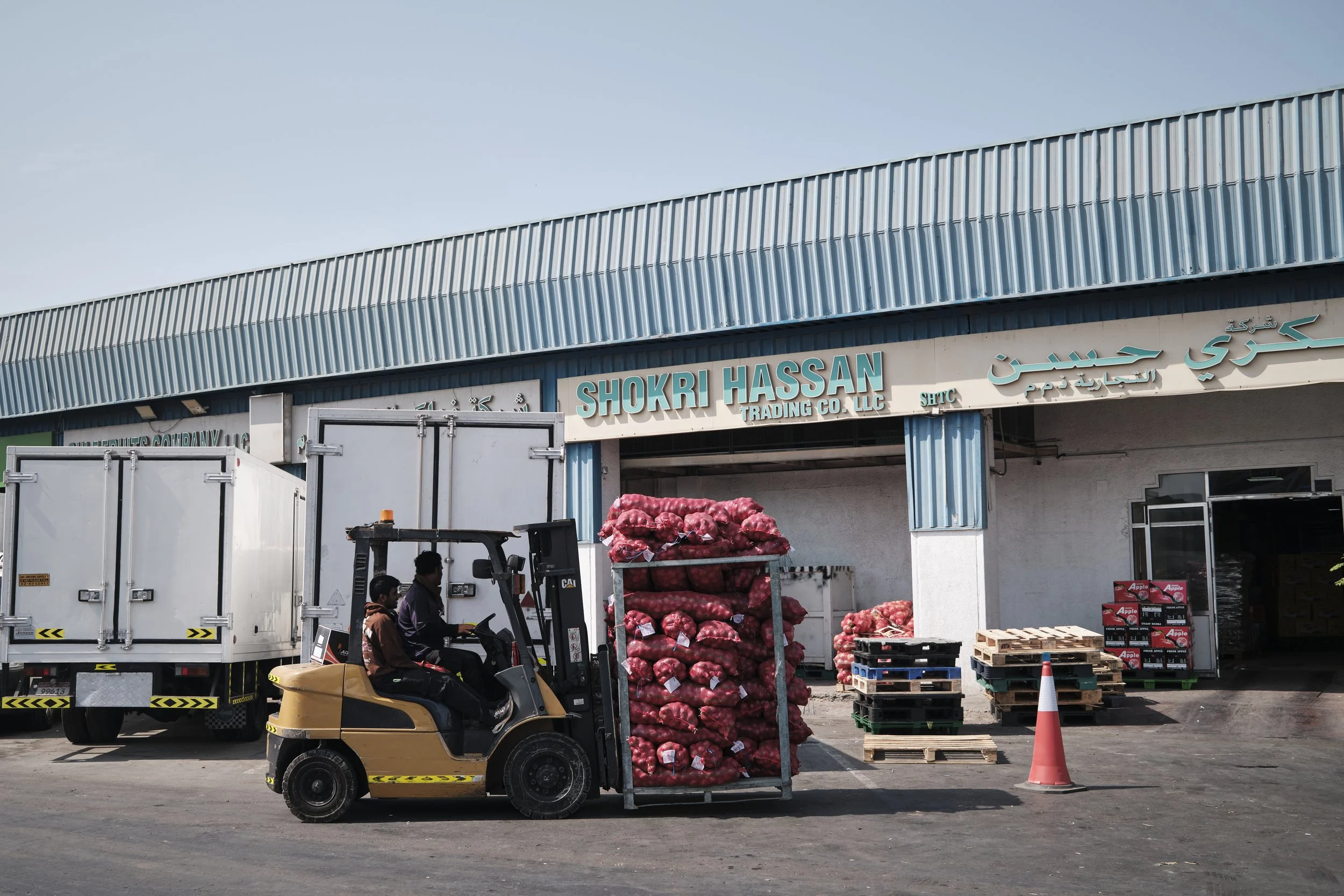
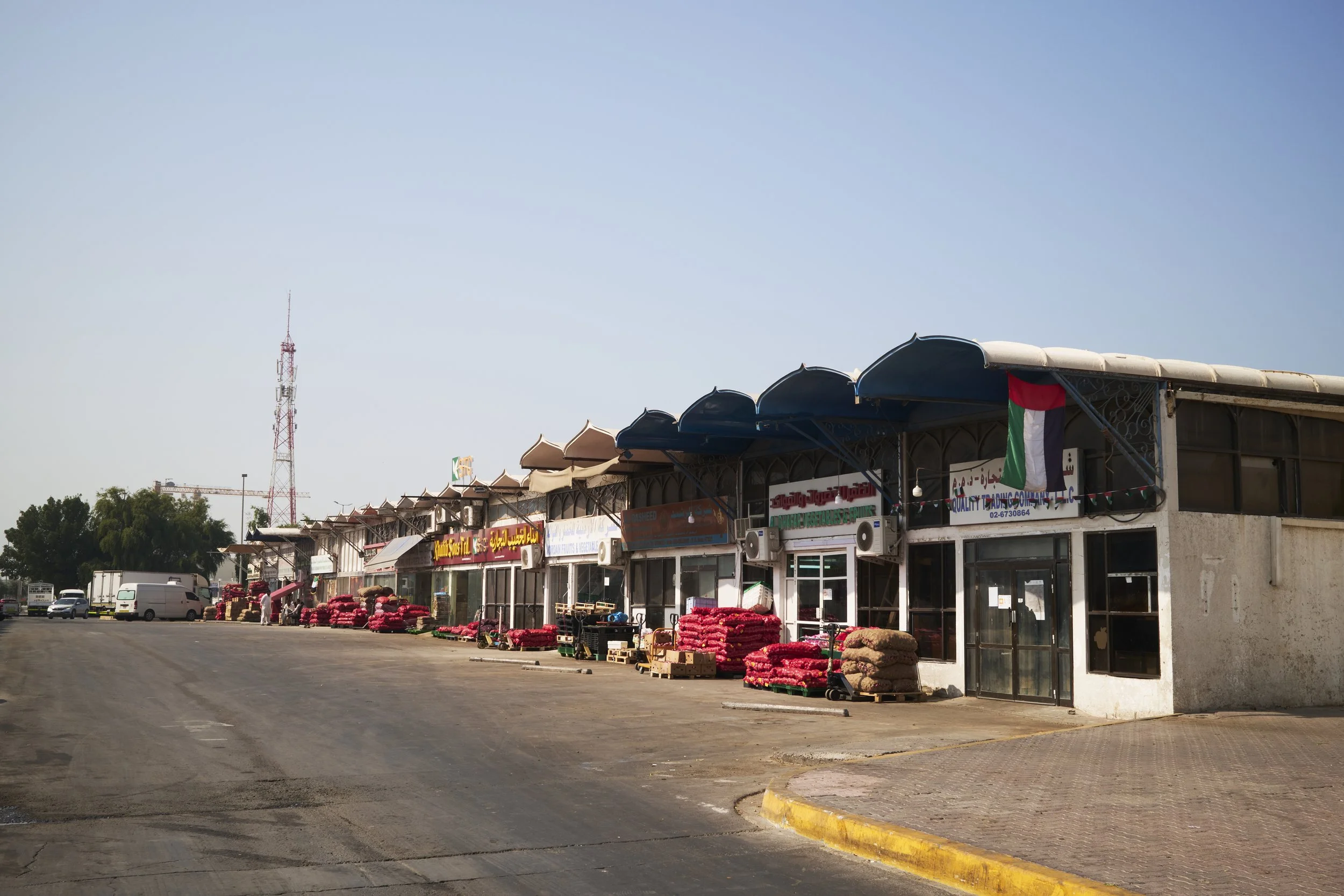
Walking away from the date market, I decided to explore the broader area. I knew that there were other markets within the vicinity, including a fruit and vegetable market as well as a fish market. Despite being past midday, there was still a fair amount of action, with a constant flow of trucks and forklifts passing by. The tourist crowd hadn’t followed me out here; instead, I knew I was being observed by the wholesale sellers, who I’m sure were wondering if this Chinese looking man was lost.
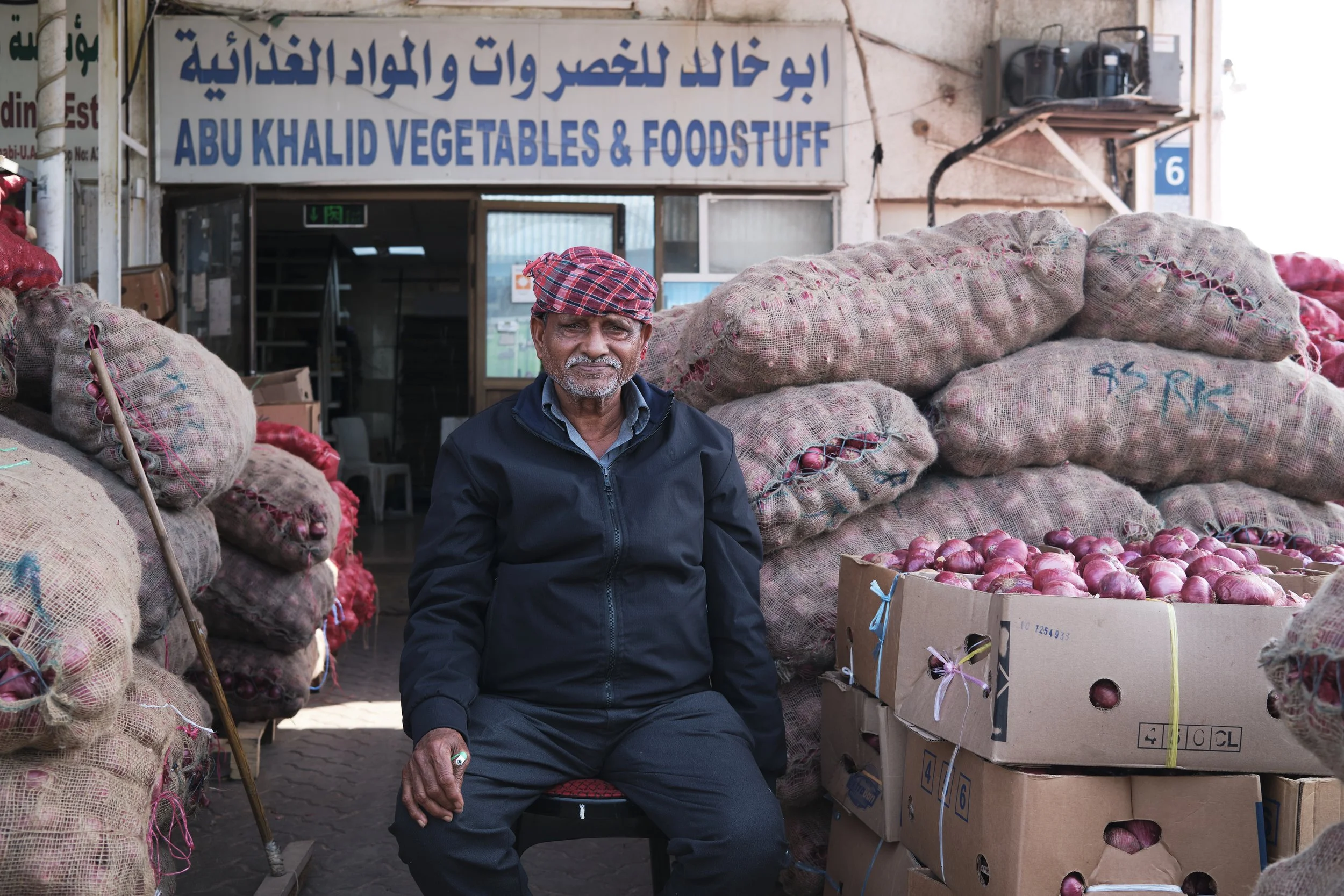
I started chatting with this Bangladeshi man who had been selling onions at this port for 32 years. He started pointing out all the different types of red onions in his stall, coming from all around the wider region (he said his onions from India were the best). He was impressed when I told him I was Singapore, comparing it to Dubai as a “great place for making money”. He said that he went through bags and bags of onions a day, selling to supermarkets and big retailers, which made me remember just how important onions are in Arabic cuisine.
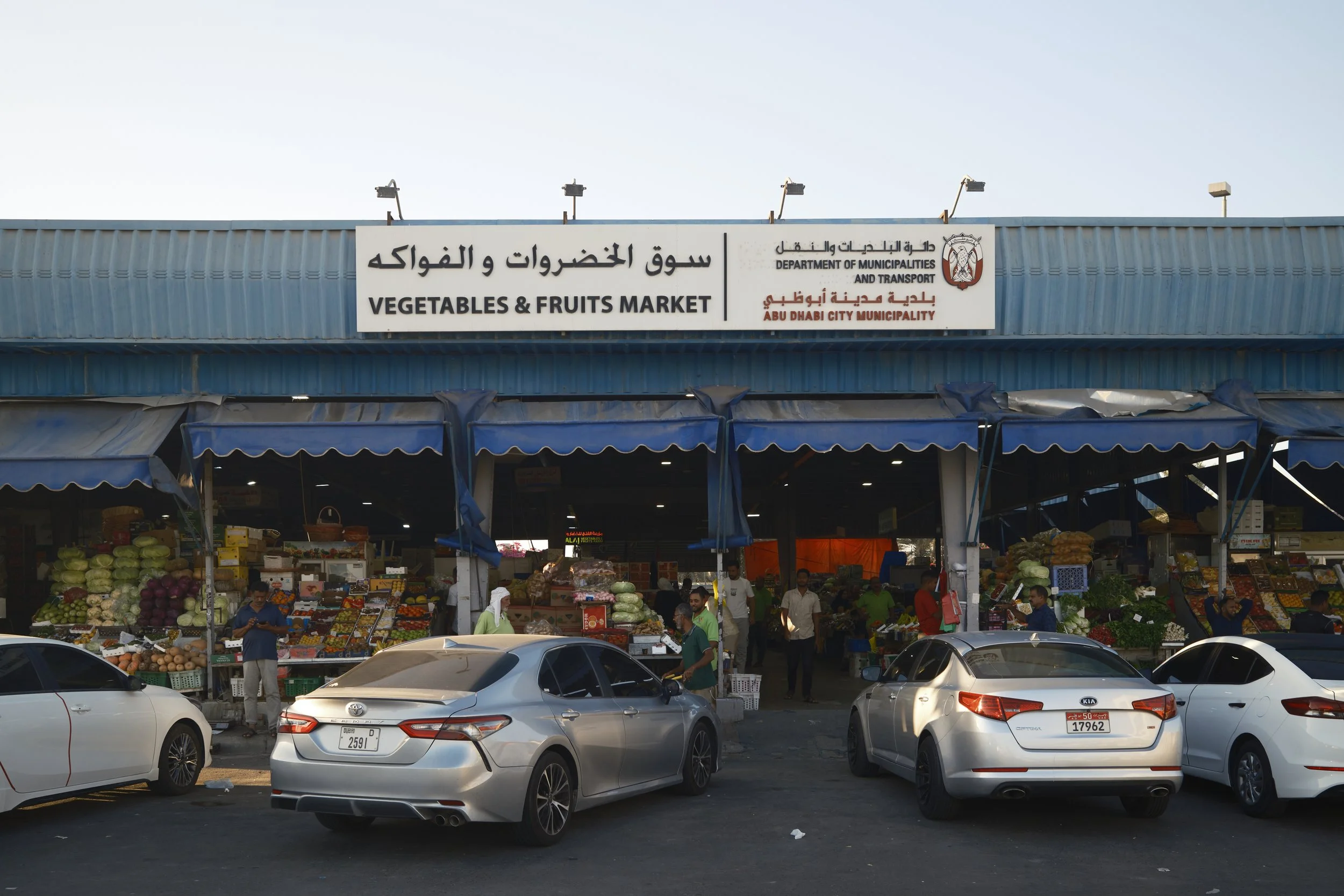
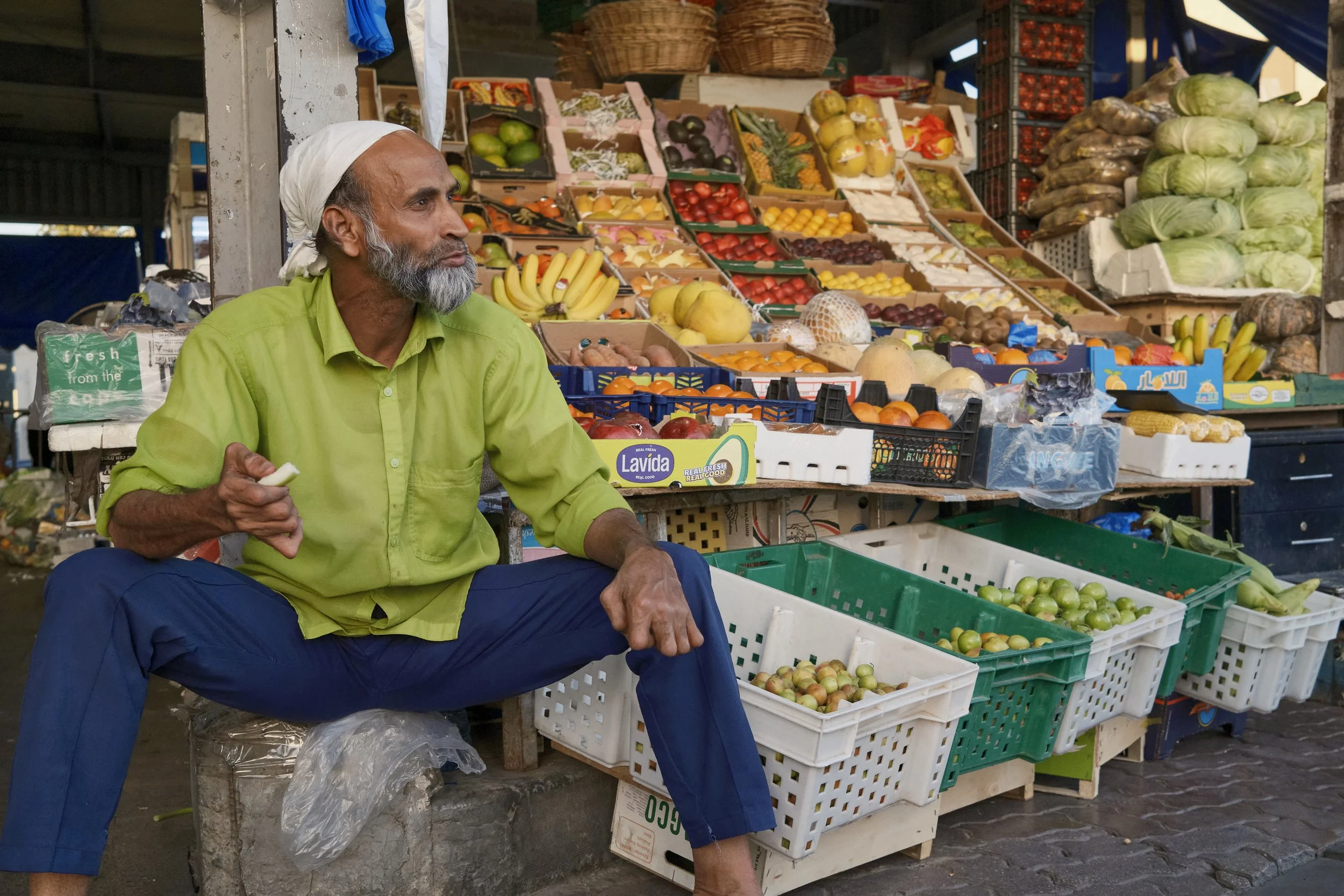
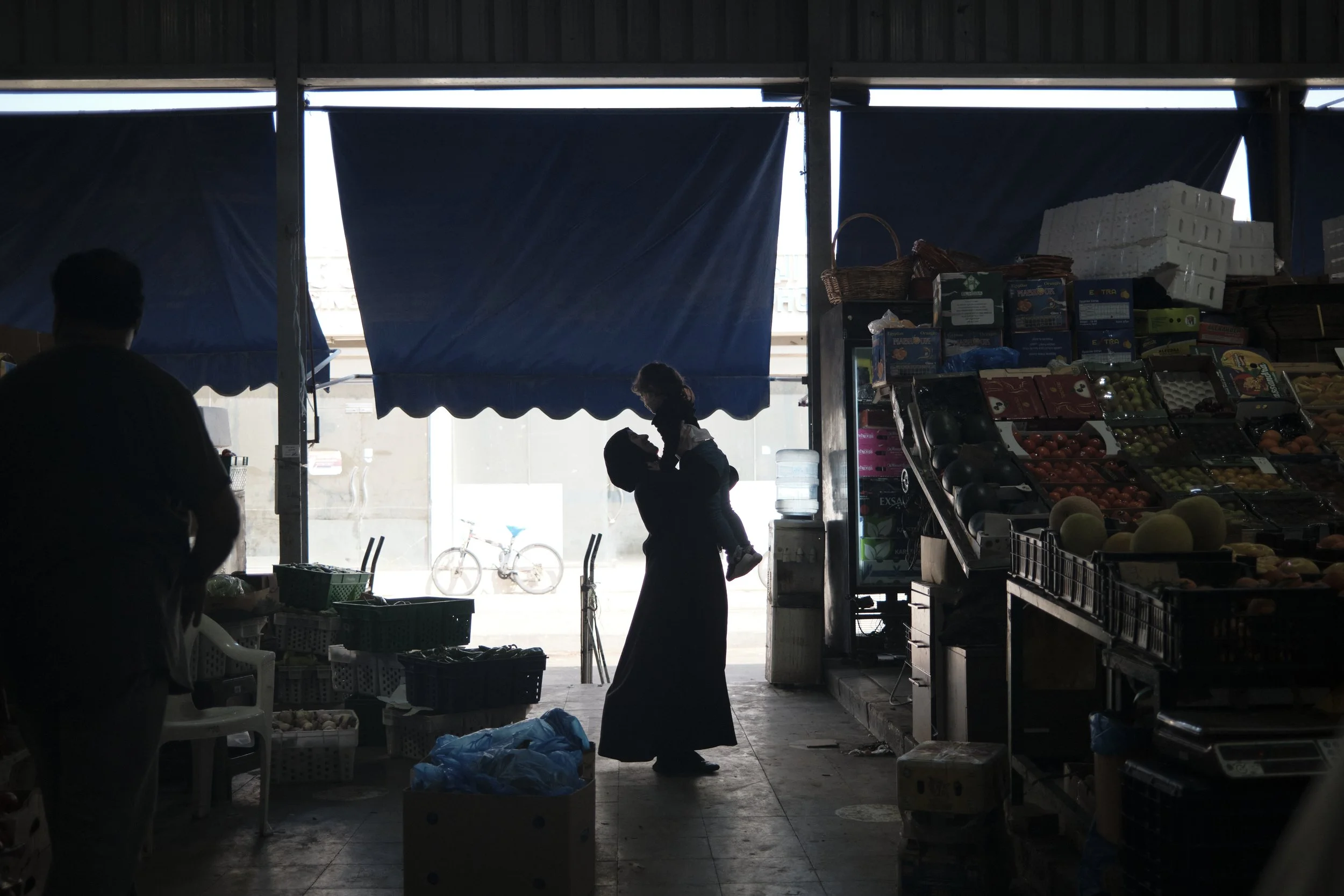
I carried on walking and eventually reached the fruits and veg market. My first thought was that it felt familiar, like the many wet markets back home. It even had the same tin roof. Just like home, it was a large array of fruits from all over the world on display, the constant buzz and chatter, the earthy aroma of fresh herbs (thankfully I didn’t have to deal with the smell of durian), and people going about with their daily lives. Mothers trying to do their daily shopping while their kids ran around, fathers sometimes standing around carrying the shopping. It’s probably fair to say that there was nothing “remarkable” about this market. It wasn’t particularly big or fancy. But like similar markets all around the world, it was clearly a site of daily life and daily exchange. Where real, ordinary people came to do their shopping. And maybe that’s what I liked about it. It wasn’t trying to be an attraction. More so than nearly everywhere else I had been to in Abu Dhabi, it felt real.
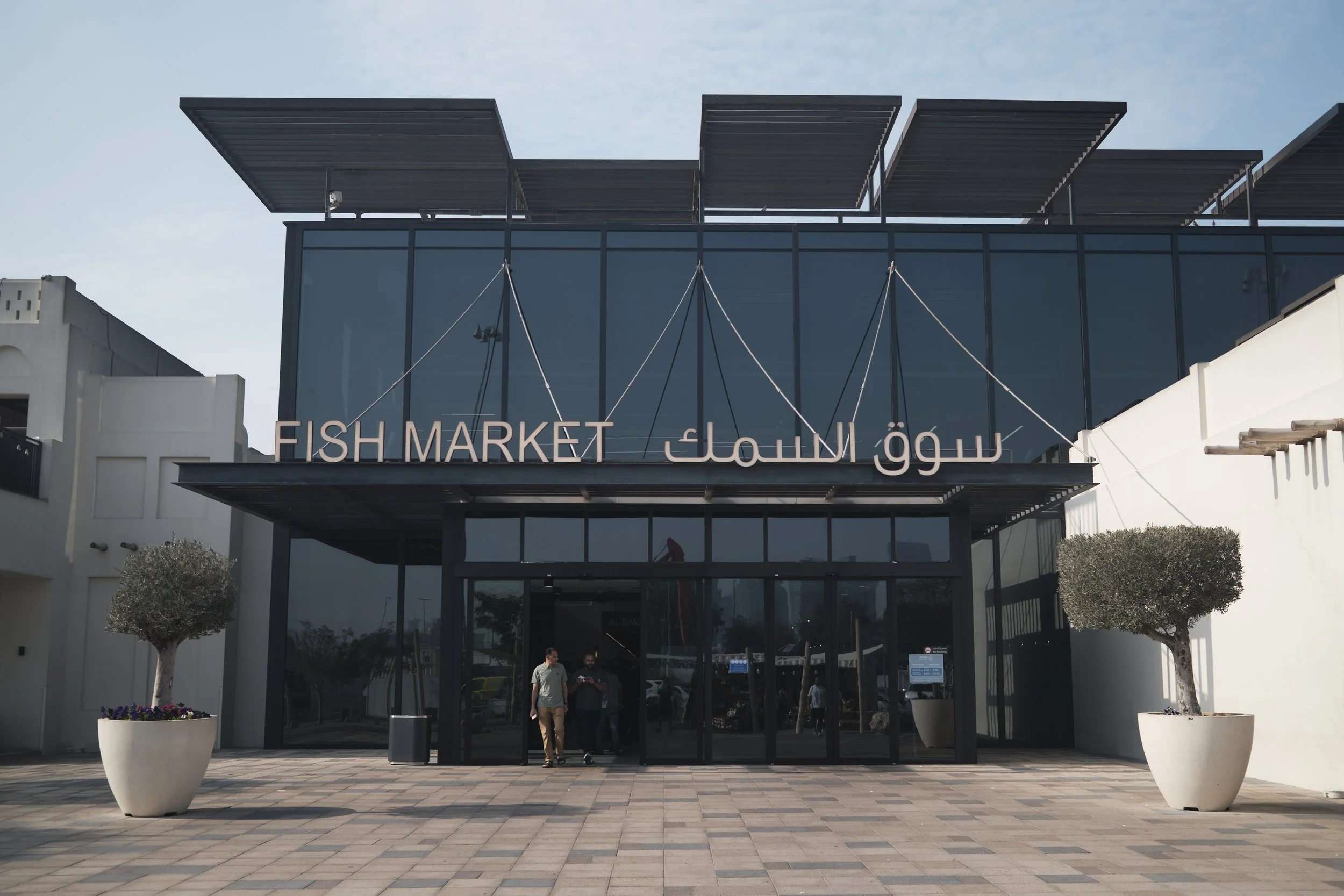
My last stop of the day was the Al Mina Fish Market. It was a modern market, where you could choose your fish and have it grilled or fried, and then eaten at any one of eight connecting restaurants. The market was air conditioned, clean, and somehow didn’t really smell of fish. It was by far the most polished of the three markets, but it was also the least impressive to me. This felt like what I thought a market in Abu Dhabi would look and feel like – modern, comfortable, but also sanitised and kind of sterile. While the vegetable market felt like it was truly aimed towards locals and the date market a mix, the fish market felt more touristy. (Afternote: I later learned that the fish market, which re-opened in 2023, was the first phase of development in a new market complex within the area, and that the date and fruit and veg markets would also eventually move too.)
Rather anticlimactically, my photography journey was abruptly halted when the security told me that “professional” photography was banned within the market (while standing next to a few tourists happily snapping away on their phones.) With not much else to do, I ended up picking out a nice seabass myself, and enjoyed an admittedly lovely lunch, Well, I guess this market isn’t all bad.